What Could Our River Park Become? Take a Look at the Highlands…
Across the Highlands, an inspiring river restoration journey shows exactly what’s possible when nature is given space to recover. Working along the River Peffery near Dingwall, NatureScot and partners delivered a three-phase transformation that turned degraded land into a thriving river landscape.
The River Peffery Restoration project was in three parts and all involved the River Peffery in the Highlands. In the nearby town of Dingwall flooding from the river was affecting the whole community. Project Manager Richard Lockett decided to look at doing something a bit more radical to solve the issue and started to think about re-meandering the river.
🌱 Phase 1 – Helping Nature
The project began with a Helping Nature project to restore a short stretch of river to test ideas, learn lessons and build confidence.

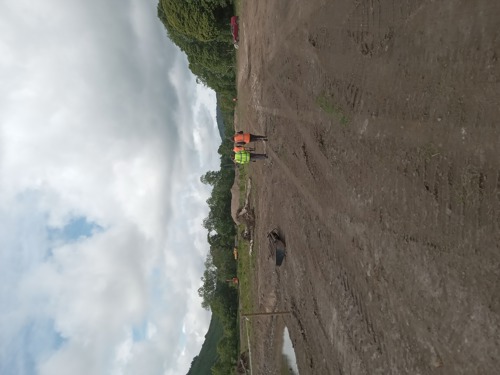
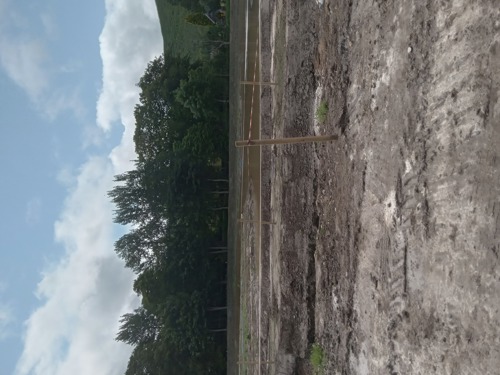
Fodderty during construction
Two years later? The area had completely transformed. Vegetation flourished, habitats expanded, and wildlife returned in force. In fact, just six months after work finished, a rare egret was already spotted on site.
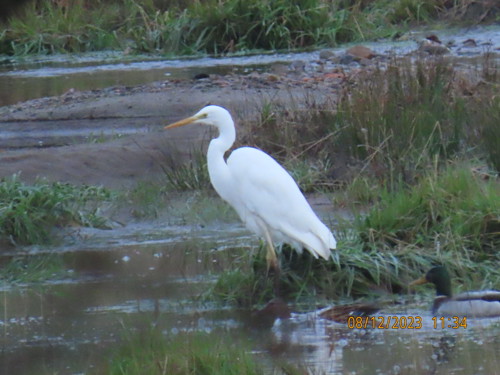
You can watch Richard Lockett of Lockett Agri-Environmental talk about that first project here:
https://www.nature.scot/funding-and-projects/nature-restoration-fund/nature-restoration-fund-nrf-supported-projects
Phase 2 – Transforming Nature (Development)
Building on early success, the team developed designs to restore the entire River Peffery from its mountain peatland source (now restored through a Peatland Action project) all the way to its final outlet into the Cromarty Firth in the Highland town of Dingwall - around 15km of river corridor. This was a Transforming Nature Development project, similar to that of the Nature Networks being created in the River Park at Levenmouth.
Phase 3 – Transforming Nature (Delivery)
After this success they applied for the final phase with a Transforming Nature Delivery Plan. The river was re-meandered. Wetlands were created. Floodplains were reconnected.
And nature wasted no time moving back in.
At the Docharty area of the river, fresh otter paw prints were found in the mud around the newly finished wetland while work was still underway! So they kept their distance and let nature settle in.
Because when we step back, wildlife steps forward.
What’s especially powerful about these images is the timeline:
-
The Helping Nature “after” photos were taken two years on — showing just how lush and established the landscape becomes.
-
The Transforming Nature photos were captured only weeks after completion — and already you can see the shape of a new river park emerging.
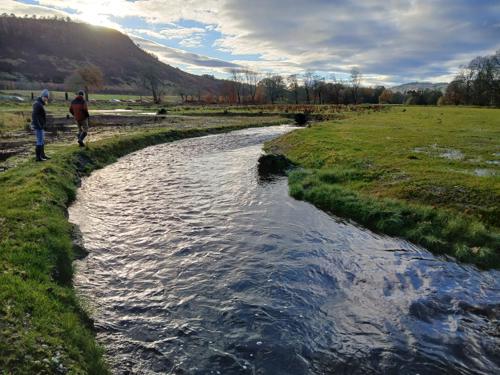
Fodderty after
The message is simple:
💚 Nature really does move in quickly if we give it a chance.
As we develop our own River Park Programme, projects like this show what’s possible - healthier rivers, richer wildlife, natural flood management, and beautiful spaces for communities to enjoy.
Imagine what the River Leven could look like in two years’ time…